
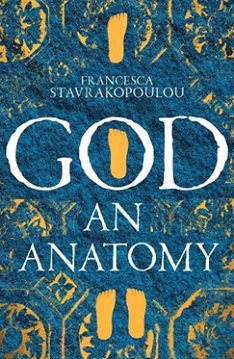
‘God:
An Anatomy’
Francesca Stavrakopoulou
Picador
Three thousand years ago, in the Southwest Asian lands we now call Israel and Palestine, a group of people worshipped a complex pantheon of deities, led by a father god called El. El had seventy children, who were gods in their own right. One of them, a minor storm deity known as Yahweh, had a body, a wife, offspring and colleagues. He fought monsters and mortals, gorged on food and wine, wrote books, and took walks and naps. He would become something far larger and far more abstract: the God of the great monotheistic religions.
The Bible has shaped our ideas about God and religion, but also our cultural preferences about human existence and experience; our concept of life and death; our attitude to sex and gender; our habits of eating and drinking; our understanding of history. Examining God’s body, from his head to his hands, feet and genitals, Francesca Stavrakopoulou shows how the Western idea of God developed. She explores the places and artefacts that shaped our view of this singular God and the ancient religions and societies of the biblical world. She analyses not only the origins of our oldest religions, but also the origins of Western culture.
About the author
Francesca Stavrakopoulou is Professor of Hebrew Bible and Ancient Religion at the University of Exeter.

- Original and courageous. This ambitious yet readable discussion of the physicality of God enhances our understanding of the history of monotheistic religions and Western culture.
Wolfson History Prize judges


