
History
The Wolfson History Prize has been awarded annually since 1972 by the Wolfson Foundation, an independent grant-making charity with a focus on research and education.
It was established largely on the initiative of the Wolfson Foundation’s then chairman, Leonard Wolfson, backed by trustees and other advisers, including the philosopher and historian Isaiah Berlin and the publisher George Weidenfeld.
- …when we set up the prizes, the object was to encourage British historians to write in such a way that they would reach a general public and not barricade themselves behind their scholarly expertise to conduct a private debate.
Alan Bullock, former chair of judges and trustee of the Wolfson Foundation
The winners of the prize span the full range of historical enquiry: from biography to social, cultural and economic history to books about politics, war and international relations. All periods and geographic regions are represented. The roll call of winners – and the announcement of the prize each year – is a public statement of the importance of historical writing within British cultural life.
Timeline
50 years of the Wolfson History Prize
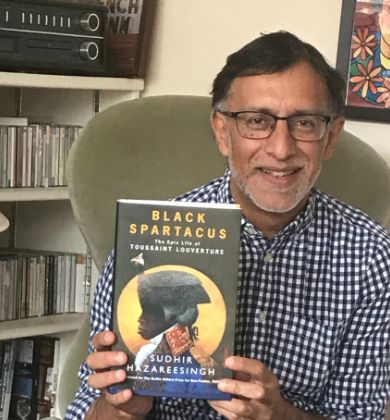
The 2021 Wolfson History Prize is won by Sudhir Hazareesingh for ‘Black Spartacus: The Epic Life of Toussaint Louverture’, an account of the incredible life of the leader and hero of the Haitian Revolution.

Pevsner won in 1976 with his final book ‘A History of Building Types’, which marked the culmination of his career before his death in 1983. He became a household name for his colossal 46-volume series of county-by-county guides, ‘The Buildings of England’. Susie Harries’ biography, ‘Nikolaus Pevsner: The Life’, was…Read More
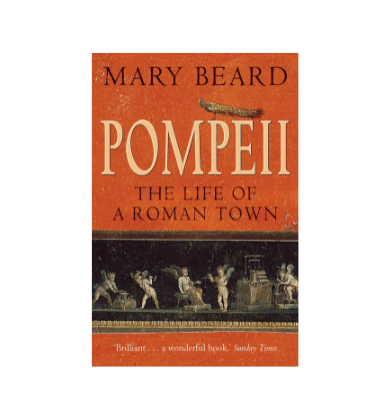
In December 2010, Beard presented ‘Pompeii: Life and Death in a Roman Town’, taking viewers on a journey round the town as she had done for readers through her book. Her presenting career began after she was approached by former BBC Two controller Janice Hadlow, who had read her book…Read More

1989 winner and former judge, Richard Evans, is the main expert witness when David Irving sues the American academic Deborah Lipstadt after she accuses him of being a Holocaust denier in her book ‘Denying the Holocaust’. The trial made headlines all over the world and Evans was latterly portrayed by…Read More

Hollis was a Labour peer who served as a welfare minister under Tony Blair. At the time she won the prize, she was a member of the House of Lords and a junior minister in the Department of Social Security.

The 1975 winners were Olwen Hufton for ‘The Poor of 18th-century France, 1750-1789’ and ‘Frances Donaldson (1907-1994) for ‘Edward VIII’. A farmer and writer, Donaldson’s first books were on farming before she turned to biography. After winning the Wolfson History Prize, Donaldson was an adviser on the BAFTA winning series…Read More
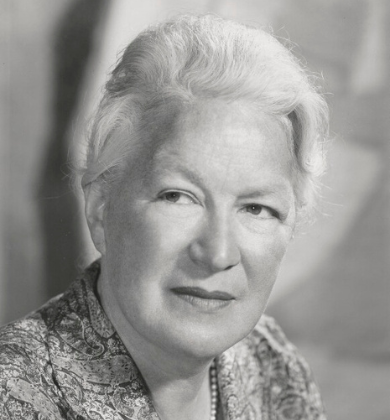
Wedgwood established herself as a historian with ‘The Thirty Years War’, published before she was 30. She was most well known to general audiences for her trilogy on the English Civil War, even though the final volume was never completed as planned. She received many honours recognising her work, including…Read More

The first Wolfson Literary Awards for History, as they were known, were presented at a luncheon in the Dorchester Hotel and arose from an ambitious scheme proposed by Leonard Wolfson (1927-2010). Lord Wolfson originally envisioned multiple categories in various fields of scholarship and artistic achievement. These would be along the…Read More


