
Read the 2026 Wolfson History Prize shortlist
‘Silence of the Gods’
by Francis Young
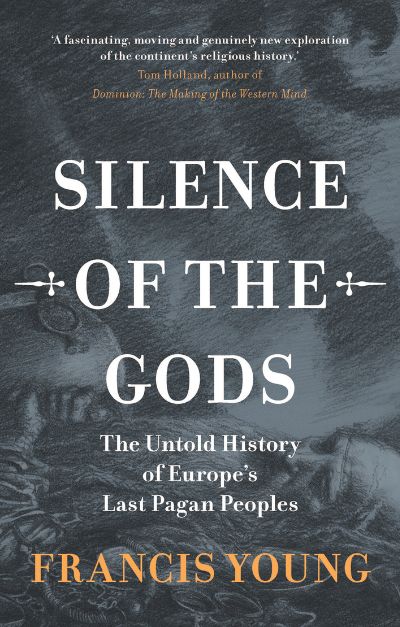
A masterful new history of Europe’s last unchristianised peoples in the period between 1387 and 1900, from the Sámi of northern Fennoscandia to the Balts and the Finno-Ugric peoples of European Russia, exploring the reasons for their late adoption of Christianity and their creative religious responses to encounters with missionaries.
An extract from Silence of the Gods: The Untold History of Europe’s Last Pagan Peoples
On Ash Wednesday 1387 Grand Duke Jogaila of Lithuania – newly crowned king of Poland and bearing his new polonised Christian name of Władysław Jagiełło – arrived in his capital city of Vilnius. At the time, Vilnius was the capital of a vast polity forged by the Lithuanians from the 12th century onwards, which reached from the Baltic Sea to the territory of the Crimean Tatars at the edge of the Black Sea; the Grand Duchy of Lithuania took in today’s Belarus, parts of Ukraine, and some of what is now western Russia. 14th-century Vilnius was a multi-religious city; there were already Orthodox and Catholic churches there and a Franciscan friary. There may even have been small communities of Jews and Muslim Tatars. But at the heart of the city stood a roofless building, unlike any other in a European capital city. Built as a cathedral over a century earlier, it was now sacred to Perkūnas, the god of thunder, and open to the skies. Six fires burned before a six-sided altar, representing the cycle of the year, where goats were sacrificed to the thunder god. On a hill above the city burned a perpetual fire, attended by a vaidila (priest) who divined the future by gazing into the flames. Sacred forests, where it was forbidden to fell a tree or hunt animals, surrounded the city, and at the confluence of the Rivers Neris and Vilnia was a sacred site dedicated to the cremation of the mighty dead.
Jogaila laboured for days to convince his people to embrace the Catholic Christian faith. It was no easy task; the Lithuanians had been at war with the Teutonic Knights, a crusading missionary order, for the past century and a half. Refusal to embrace one of the proselytising monotheistic faiths – Latin Catholicism, Greek Orthodox Christianity, or Islam – had become a defining feature of Lithuanian identity. Furthermore, Jogaila’s Polish priests had no knowledge of the Lithuanian language and the king himself had to act as translator. However, Jogaila had brought woollen robes which he offered as a gift to anyone who accepted baptism, and eventually the Lithuanians consented to be baptised en masse; the priests organised the converts into huge square formations by sex and sprinkled them with water while baptising everyone in each group with the same Christian name. The perpetual fire was extinguished, the altars were broken, the sacred forests were cut down, and the sacred snakes were killed.
These events marked the official conversion of Europe’s last ‘pagan’ polity, the Grand Duchy of Lithuania. Christendom was, apparently, triumphant; and the conversion of Lithuania has often been taken as the high-water mark of the long process of conversion of the ‘barbarian’ peoples outside the Roman Empire that had begun a millennium earlier. It was the end of the imagined ‘pagandom’ that menaced Christian Europe. But the reality was rather different. As Jogaila stage-managed political and religious theatre in Vilnius… many European peoples remained unchristianised for centuries thereafter. This book is about them.
Return to the 2026 shortlist.


