
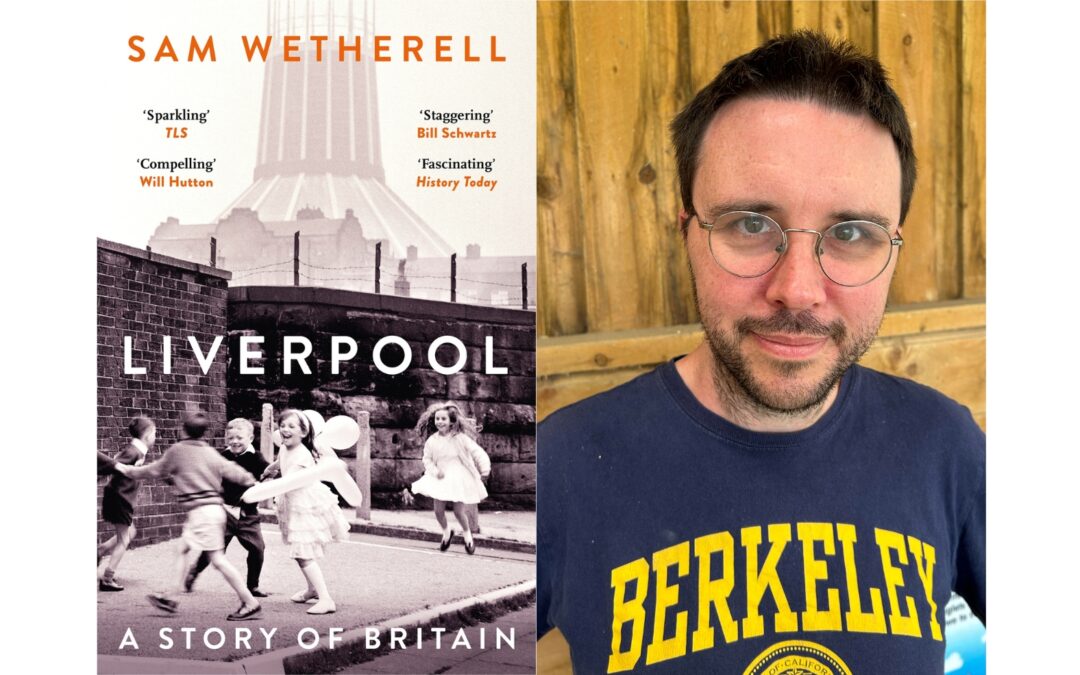
Describe your book in six words
Liverpool’s past is the country’s future.
How does it feel to be shortlisted for the Wolfson History Prize 2026?
I feel absolutely delighted to be shortlisted. Historical writing has always been extremely important to me and one of the reasons I love being a historian is that it is a craft where writing and communication are taken seriously. The Wolfson Prize does wonderful work in this regard, and it is the highest honour for someone like me who cares deeply about prose, storytelling and about disseminating complex ideas as widely as possible.
I also wanted this book to be a gift to the city of Liverpool. I wanted it to demonstrate that local histories of parts of Britain (beyond London!) can have enormous explanatory power and interest.
What inspired you to get into history?
My interest in history was sparked and cultivated by two wonderful teachers — Ms. Eames and Mr. Masters (I realise now I still don’t know their first names!) — in my provincial and otherwise very underwhelming school in Milton Keynes. They were enthusiastic about history as something dramatic and immersive and as a curious teenager it was the storytelling element of history that I found most compelling.
Why is history important?
Now I’m older I have a much clearer political investment in history. History is ultimately emancipatory. By showing the weirdness, fragility and contingency of the past, good history writing can help us realise that the present is more up for grabs than we realise, and the future more open ended. It is an academic discipline about imagination rather than constraint. In the words of the late great anthropologist David Greaber, history teaches us that we are “already free.”
What was the most interesting fact you discovered during your research?
In the mid-1980s, Liverpool had one of the lowest rates of HIV in the country, despite having one of the biggest heroin problems in Britain. At first, this fact seems interesting, but unremarkable. However, I love it because the fact is a testament to the radical underground work carried out by the city’s clean needle exchange service, which operated in secret and in opposition to the police, the press and the city council. There are many stories of despair and ruin in this book, but I wanted to focus on a hopeful act of radical resistance and care in the city which quietly saved hundreds, perhaps thousands of lives.
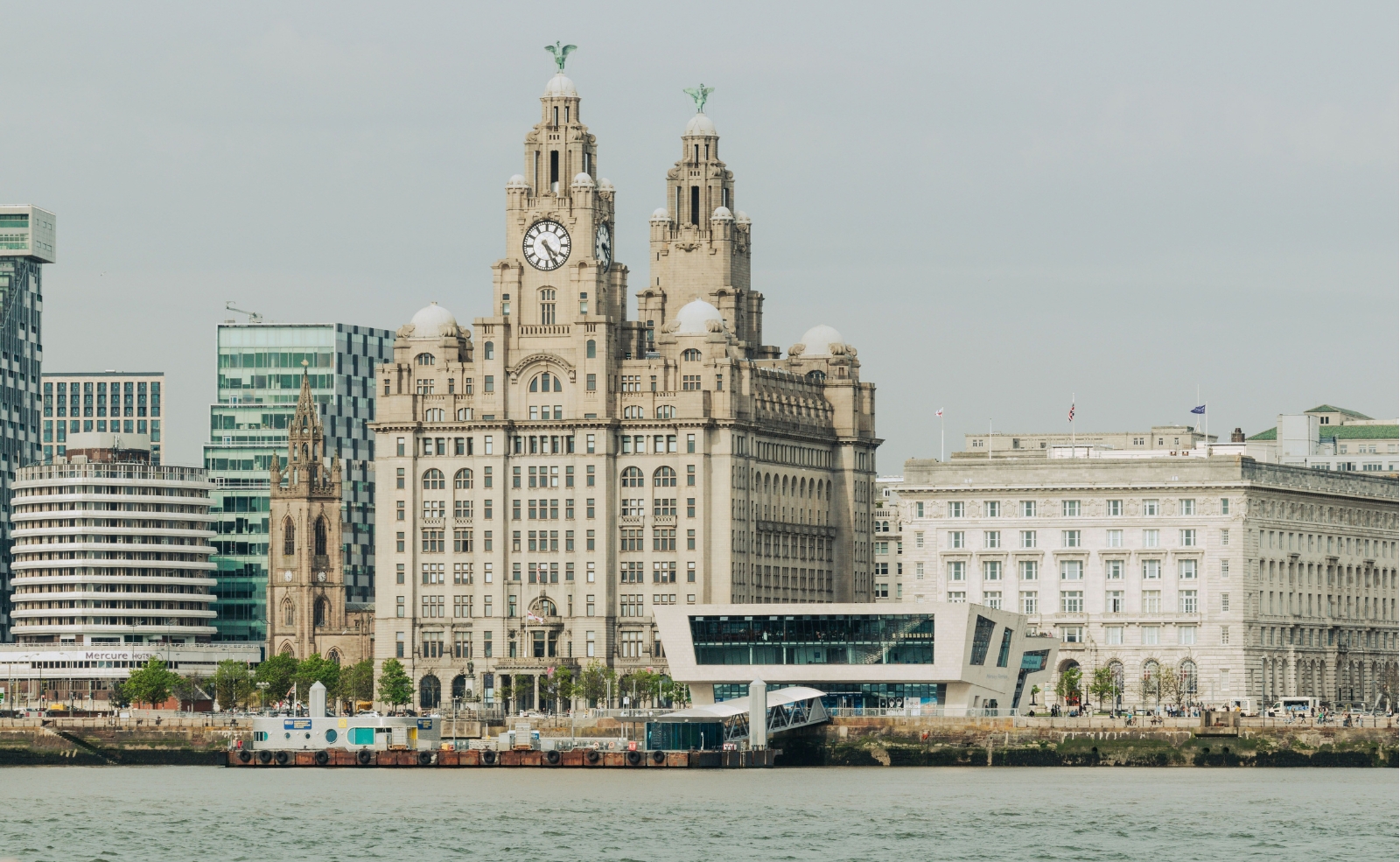
The Royal Liver Building on Liverpool’s waterfront.
What did the research process look like for you? What were the key milestones along the way?
I began my career writing about the history of British cities and urban spaces, which is the topic of my first book, and I had always thought that the history of Britain was best told through a single city. It seemed obvious to me that our present moment, one characterised by stalling growth, environmental ruin, infrastructural obsolescence and new types of imaginative political movements demanded a history of Liverpool, a place where those trends have a longer history.
My decision to choose to write about Liverpool was also made easier by the fact that the city has a wonderful archive and I’m very indebted to the archivists in the city’s Record Office. A key moment came when I was given advance access to an extraordinary collection of documents kept by the Liverpool 8 Law Centre, a Black activist group in the city. The collection had only just been uncovered and donated. Among many other things, the collection held hundreds of transcriptions of depositions from Black people in Liverpool who had been victims of police violence in the months immediately after the 1981 disturbances, none of which had been catalogued or seen before.
In the National Year of Reading, why does reading historical non-fiction matter today?
It is often said by some commentators that history is a menu of lessons that we need to learn from so we can avoid making mistakes in the present. I’ve always thought the exact opposite. Reading history is an exercise in imagining otherwise. Its only lesson is that the future is less certain and more open to possibilities than we can imagine. For this reason, there is something profoundly liberating about reading about the past. Good historical writing, among many other things, can be a source of profound hope during times of darkness.
Read an extract from Liverpool.
Return to the 2026 shortlist.
Top images: ‘Liverpool’ book cover; portrait of Sam Wetherell.


