
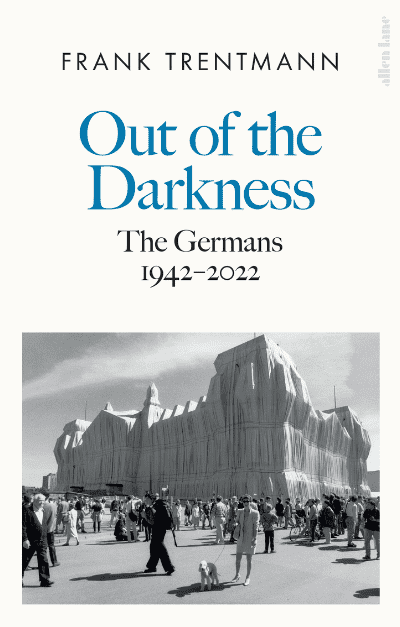
‘Out of the Darkness:
The Germans, 1942-2022′
Frank Trentmann
Allen Lane
In 1945, Germany lay in ruins, morally and materially. The German people stood condemned by history, responsible for a horrifying genocide and a war of extermination. But by 2015 Germany looked to many to be the moral voice of Europe, welcoming almost one million refugees. At the same time, it pursued a controversially rigid fiscal discipline and made energy deals with a dictator. Many people have asked how Germany descended into the darkness of the Nazis. This book asks another vital question: how, and how far, have the Germans since reinvented themselves?
Trentmann tells the dramatic story of the Germans from the middle of the Second World War, through the Cold War and the division into East and West, to the fall of the Berlin Wall and the reunited nation’s search for a place in the world. Their journey is marked by extraordinary moral struggles: guilt, shame and limited amends; wealth versus welfare; tolerance versus racism; compassion and complicity. Through a range of voices – German soldiers and German Jews; environmentalists and coal miners; families and churches; volunteers, migrants and populists – Trentmann paints a remarkable and surprising portrait over 80 years of the conflicted people at the centre of Europe.
About the author
Frank Trentmann is Professor of History at Birkbeck, University of London, and at the University of Helsinki. He studied at the University of Hamburg, the London School of Economics and at Harvard University, and began teaching history at Princeton University. He is the author of Empire of Things and Free Trade Nation, and has been awarded the Whitfield Prize, a Moore Distinguished Fellowship at Caltech, the Austrian Science Book Prize, the Humboldt Research Award and, in 2023, the Bochum Historians’ Prize. He grew up in Hamburg and lives in London.
Read an extract from Out of the Darkness: The Germans, 1942-2022.

- A wide-ranging and engaging portrait of Germany since World War II, highlighting the remarkable regeneration of its people in the post-Nazi era and the strength and vitality of its political culture.
Wolfson History Prize judges


